
Questions to Ask Your Child Mindfully (So They Actually Open Up)

Amanda
"Fine." "Good." "Nothing much." If that's all you get at pickup, the problem usually isn't your child. It's the question. Here's how to ask smaller, more specific questions that actually get kids talking, and why the small moments matter more than the whole day summary.
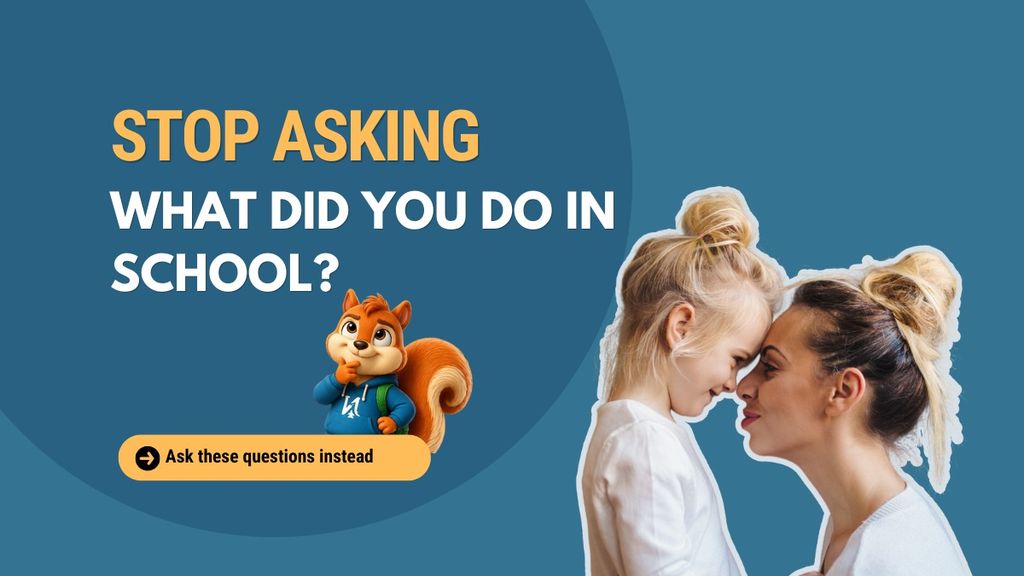
"How was your day?"
"Fine."
If that exchange sounds familiar, you're not doing anything wrong. Almost every parent hits this wall at some point, usually right around the age kids start having a full day away from home, whether that's school, an after school program, or both. You want to know what happened. They've already moved on to snack time or screen time or whatever comes next. And "fine" becomes the answer to everything.
The problem usually isn't that your child doesn't want to talk. It's that the question doesn't give them much to talk about.
Why "How Was Your Day" Doesn't Work
Think about it from a child's point of view for a second. "How was your day" is a huge question. It asks them to sort through six or seven hours of school, recess, lunch, maybe an after school program, friendships, frustrations, and boredom, and compress all of it into one tidy answer. Most adults would struggle with that too if someone asked us the same thing at the end of a long workday.
Kids, especially younger ones, don't yet have the language or the patience to summarize a whole day on command. So they default to the easiest possible answer. Fine. Good. Nothing much.
Asking mindfully isn't about asking more questions. It's about asking smaller, more specific ones that actually match how kids think and remember.
Ask About Moments, Not the Whole Day
Instead of asking about the entire day at once, try narrowing the window. Kids remember specific moments far better than they can summarize a stretch of time.
Try something like:
- "What made you laugh today?"
- "Who did you sit with at lunch?"
- "What was the best five minutes of your day?"
- "Did anything feel tricky or annoying today?"
These questions hand your child a smaller, more manageable piece of the day to describe. It's a lot easier to talk about one funny moment at recess than to summarize an entire seven hour stretch.
Timing Matters More Than the Question Itself
Even the best question can fall flat if it's asked at the wrong moment. Right after pickup, many kids are tired, transitioning, or just not ready to talk yet. Pushing for details in that window often gets you the shortest answers of the whole day.
Some of the best conversations happen sideways, not head on. In the car, while doing something else together, or right before bed when the day has settled a bit. Kids often open up more easily when they're not being looked directly in the eye and interrogated. Something about being side by side, in the car or walking the dog or washing dishes together, makes it feel less like a question and more like a conversation.

Ask Open Ended Questions, Not Yes or No Ones
"Did you have a good day?" invites a one word answer. "What was something new you tried today?" invites a story.
The shift is small but it matters. Questions with a yes or no answer close the door almost as soon as you open it. Open ended questions leave room for your child to actually think and share something you didn't already expect.
A few worth keeping in your back pocket:
- "What's something you're proud of from today?"
- "Did you help anyone today, or did anyone help you?"
- "What's something you wish had gone differently?"
- "What are you looking forward to tomorrow?"
These kinds of questions work just as well for a regular school day as they do for asking about an after school program, sports practice, or a playdate. The goal is the same everywhere: give your child a specific, manageable piece of their day to talk about, instead of the whole thing at once.
Listen for What They Don't Say
Mindful listening matters just as much as mindful asking. Sometimes what a child avoids talking about tells you more than what they eagerly share. If your child lights up describing art time but goes quiet whenever a certain classmate's name comes up, that's worth noticing, even if you don't push for more right away.
Try not to jump in immediately with advice, corrections, or your own related story. Kids, like most people, often just want to be heard first. Following up with "tell me more about that" or simply staying quiet for a beat longer than feels natural can invite more than another question would.
Make It a Two Way Conversation
One of the simplest ways to get a child talking is to share something small about your own day first. "I had a funny thing happen at work today, want to hear it?" often opens the door for "okay, well something funny happened to me too." Kids tend to mirror the openness they see modeled for them.
This also takes the pressure off. Instead of feeling like an interview, it starts to feel like two people catching up, which is exactly what it should feel like.
Why This Matters Beyond Just Conversation
These small, mindful check ins do more than fill in details about your child's day. Over time, they build a habit. Your child learns that you're genuinely curious about their inner world, not just checking a box called "parenting." That sense of being truly listened to tends to carry into bigger conversations later, the ones about friendships, worries, or things that actually matter, because the habit of sharing was built early, in small, low pressure moments.
If your child is in an after school program, this kind of mindful check in becomes even more valuable. A lot happens in those hours that a parent doesn't see firsthand. We wrote more about what that stretch of independence can look like, and what it teaches parents too, in Letting Go a Little: What After School Program Teaches Parents About Independence. Asking the right questions at pickup is often how a parent finally gets a glimpse into everything their child experienced while they were apart.
A Few Questions to Try Tonight
If you're not sure where to start, pick just one or two from this list and try them tonight instead of the usual "how was your day":
- "What was the funniest thing that happened today?"
- "Did you sit with someone new today?"
- "What's one thing you did today that you're proud of?"
- "Was there a moment today you wish I had been there for?"
You likely won't get a long answer every time, and that's okay. The goal isn't a perfect conversation every single evening. It's building a habit, small question by small question, so that your child grows up knowing that someone is genuinely curious about what's going on inside their head. That's what mindful really means here. Not more questions. Just better ones, asked with real attention behind them.
Frequently Asked Questions
Published on: Aug 6, 2026 3:45 PM
Views: 409