
From Overwhelmed to Organized: How Routine After School Changes a Child's Whole Day

Amanda
The bus pulls up, the backpack hits the floor, and somehow your calm, chatty kid turns into a puddle of tears over absolutely nothing. If that scene feels familiar, you're not alone, and you're not doing anything wrong. The hours between the final school bell and bedtime are some of the most emotionally loaded of the entire day, packed with hunger, exhaustion, pent up energy, and a nervous system that has spent six hours holding itself together. What looks like an attitude problem is usually just a tired brain asking for structure it doesn't know how to ask for out loud. This is where a steady after school routine earns its keep. Not a rigid, timed out schedule, but a predictable rhythm your child can count on, one that quietly turns chaos into calm and gives them room to actually enjoy the rest of their day. Here's why that transition window matters so much, what a routine that actually works looks like in real life, and how to build one your family can stick with even on the hard days.
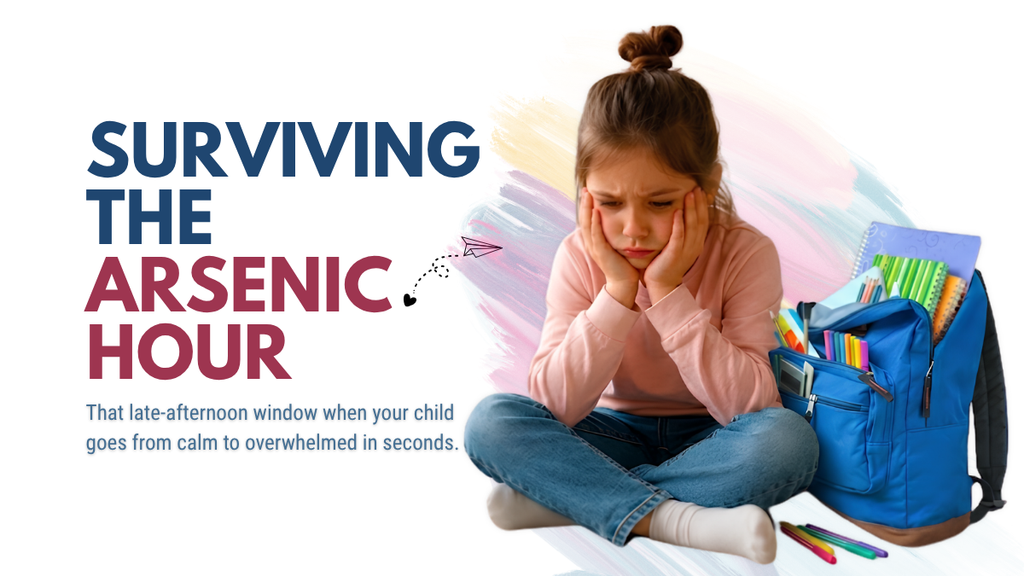
Picture this. The bus pulls up, backpacks hit the floor, and within ten minutes your once cheerful kid is melting down over a missing sock. Sound familiar? That stretch of time right after school ends up being one of the most emotionally loaded parts of the day, and most families don't even realize it.
Kids spend six or seven hours holding it together. They follow instructions, sit still, manage friendships, and try to keep up academically. By the time they walk through the door, they're running on empty. What looks like an attitude problem is often just a tired brain asking for structure.
That's where routine comes in. Not a rigid schedule with a stopwatch, but a predictable rhythm that tells a child's nervous system it's safe to relax. When kids know what comes next, snack, then homework, then play, then dinner, they stop spending energy figuring out the world and start actually enjoying it.
The Science Behind the Meltdown
There's actually a name for this window among teachers and child psychologists, the arsenic hour, and it earns the nickname honestly. It's the time of day when patience is thinnest for everyone in the house. Kids have spent hours regulating themselves in a structured environment, and the second they feel safe again, that self control naturally lets go. It's not defiance. It's relief, just expressed messily.
Parents often make the mistake of piling on more demands the moment a child walks through the door. Homework, chores, questions about the day, all at once, right when a kid has the least capacity to handle any of it. Understanding that this window calls for decompression first and expectations second changes everything about how the rest of the evening goes.
Why the After School Hours Matter So Much
Teachers and child psychologists often call this window "the arsenic hour," and for good reason. It's when patience runs thin for everyone involved. But research on child development keeps pointing to the same conclusion: kids thrive on consistency. A steady after school routine doesn't just prevent meltdowns, it builds confidence, independence, and a sense of control that carries into the evening and even into how well they sleep.
Programs that offer structured after school time, whether that's a dedicated program or simply a routine you build at home, give kids a chance to transition instead of crash. There's a difference between flopping on the couch in a daze and having a clear, gentle path from "school mode" to "home mode."
What a Good Routine Actually Looks Like

It doesn't need to be complicated. A workable routine usually includes:
- A few minutes to decompress, snack, and talk about the day
- Physical movement, even just fifteen minutes outside
- A set homework or reading window, ideally around the same time daily
- Unstructured play or a hobby they actually enjoy
- A calm wind down before dinner and bedtime
The order matters less than the predictability. Kids don't need perfection, they need to know what's coming.
Building a Routine That Actually Fits Your Family
Every household is different, and a routine copied straight from a parenting blog rarely survives contact with real life. The families who succeed tend to build their rhythm around a few honest questions. What time is everyone actually hungry? When does homework go smoothly versus turn into a battle? Does your child need to move their body before they can sit still, or does quiet time settle them faster?
Start with one anchor point, maybe it's always snack first, or always twenty minutes outside before anything else, and build outward from there. Routines don't need to be identical every single day. They need a backbone that stays the same even when the details shift.
It also helps to loop your child into the process. Kids who help choose the order of their afternoon, snack then reading, or reading then snack, tend to buy in faster than kids who have a schedule handed to them. A little ownership goes a long way toward less resistance.
If you're still weighing whether a formal program or a home built routine is the right fit, this guide on what to ask before choosing an after school program walks through the questions worth asking before you commit to anything.
Don't Forget the Unstructured Part
A common mistake is filling every minute of the after school routine with something productive, homework, then a lesson, then chores, then reading. But some of the most valuable minutes in that window are the ones with nothing planned at all. Free, unstructured play gives kids a chance to process their day in their own way, and it builds skills that a worksheet simply can't. If you want to see why that open ended playtime deserves a real spot on the schedule, this piece on unstructured play breaks down exactly what kids gain from it.
The Payoff
Parents who stick with a routine often notice fewer power struggles over homework, better sleep, and kids who seem, honestly, just happier. It's not magic. It's a nervous system that finally gets to exhale, and a household that stops running on reaction and starts running on rhythm.
Give it a few weeks. The first several days might still be bumpy, and that's completely normal. What you're building isn't a perfect schedule, it's a sense of safety your child can lean on, day after day, without having to think about it. And as that routine takes hold, you may notice something else too, a little more breathing room for you as a parent. This piece on what after school programs teach parents about letting go digs into that side of the equation, the part where routine gives everyone in the house a bit more independence.
Frequently Asked Questions
Published on: Aug 31, 2026 6:22 PM
Views: 518